



MCT1
MCT1 (SLC16A1) is a proton-linked monocarboxylate transporter that mediates the bidirectional transmembrane movement of lactate, pyruvate, and ketone bodies, thereby supporting cellular metabolism and pH homeostasis[1][2]. Mechanistically, MCT1 participates in lactate shuttling between metabolically distinct cell populations and contributes to the maintenance of glycolytic flux through coordinated transport of monocarboxylates and protons[1][2]. Because lactate transport is a central component of metabolic adaptation, MCT1 has been extensively investigated in cancer models in which lactate exchange supports tumor growth and metabolic plasticity[3][4]. Inhibition of MCT1 disrupts lactate transport, alters glycolytic metabolite profiles, and suppresses tumor growth in multiple preclinical models[3][4]. Compared with related isoforms, MCT1 displays distinct substrate and inhibitor affinities, whereas MCT4 is relatively resistant to several widely used MCT1-directed inhibitors, creating important functional differences in lactate-handling networks[2][5]. This isoform selectivity is particularly relevant for experimental design because cellular responses to MCT1 blockade can depend on the presence or absence of compensatory MCT4 expression[4][5]. For experimental applications, AZD3965 is a first-in-class MCT1 inhibitor that induces intracellular lactate accumulation and has advanced into clinical evaluation, while AR-C155858 potently inhibits MCT1 and MCT2 through binding determinants located within transmembrane helices 7-10 but shows little activity against MCT4[4][5].
References:
- [1]. Halestrap AP. The monocarboxylate transporter family--Structure and functional characterization. IUBMB Life. 2012 Jan;64(1):1-9. doi: 10.1002/iub.573. Epub 2011 Nov 30. PMID: 22131303. et al. The monocarboxylate transporter family--Structure and functional characterization. IUBMB Life. 2012 Jan;64(1):1-9. [Content Brief]
- [2]. Felmlee MA, et al. Monocarboxylate Transporters (SLC16): Function, Regulation, and Role in Health and Disease. Pharmacol Rev. 2020 Apr;72(2):466-485. [Content Brief]
- [3]. Bola BM, et al. Inhibition of monocarboxylate transporter-1 (MCT1) by AZD3965 enhances radiosensitivity by reducing lactate transport. Mol Cancer Ther. 2014 Dec;13(12):2805-16. [Content Brief]
- [4]. Ali SR, et al. Nerve Density and Neuronal Biomarkers in Cancer. Cancers (Basel). 2022 Oct 1;14(19):4817. [Content Brief]
- [5]. Ovens MJ, et al. AR-C155858 is a potent inhibitor of monocarboxylate transporters MCT1 and MCT2 that binds to an intracellular site involving transmembrane helices 7-10. Biochem J. 2010 Jan 15;425(3):523-30. [Content Brief]
All Product Categories
-
MCT1 Related Products (9)
Related Products (9)

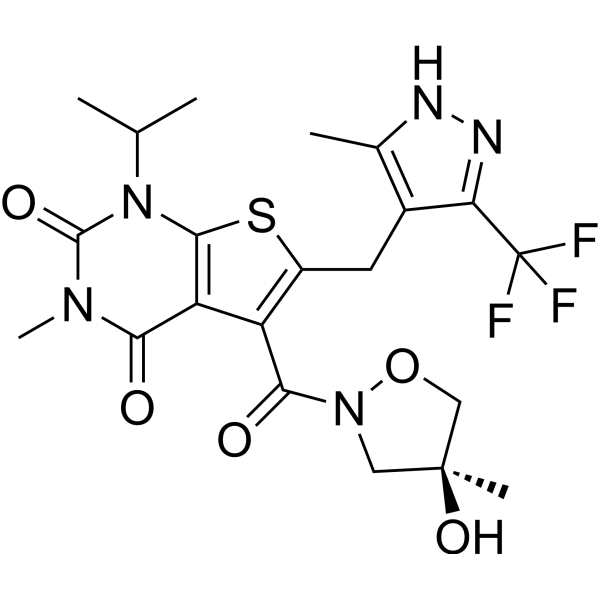
-
AR-C155858
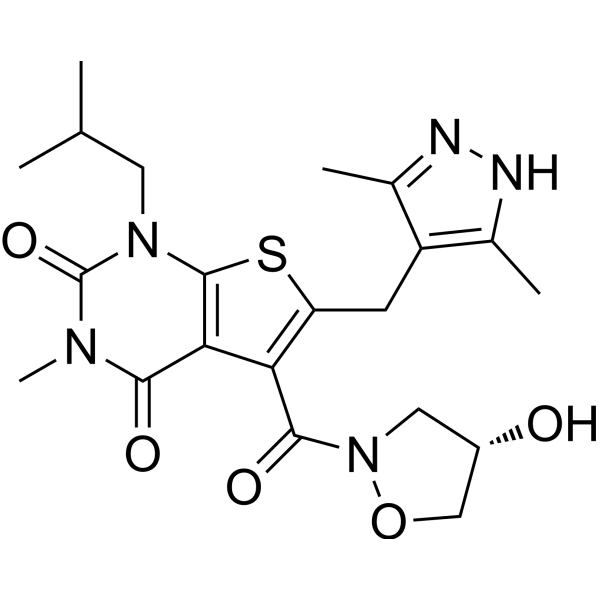 0 ImagesAR-C155858 is a selective monocarboxylate transporter MCT1 and MCT2 inhibitor with Kis of 2.3 nM and 10 nM, respectively.
-
Syrosingopine
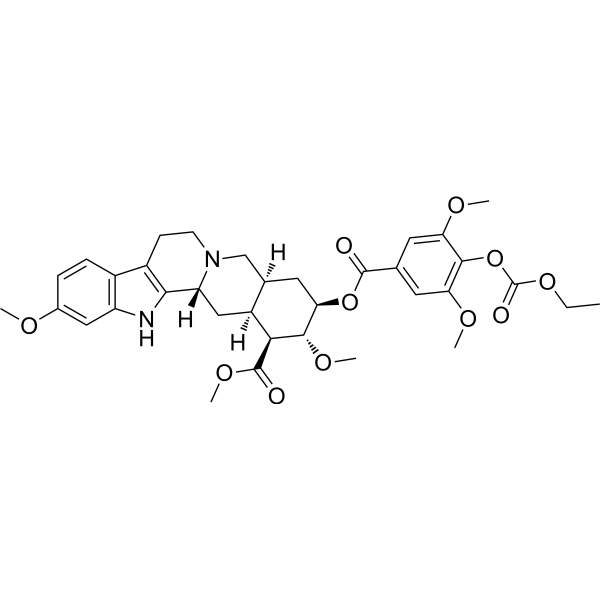 0 ImagesSyrosingopine (Su 3118) is an orally active lactate transporters (MCT1/MCT4) dual inhibitor, which can reduce glycolysis and induce synthetic lethality in cancer cells when combine with metformin. Syrosingopine shows anti-hypertensive activity by depleting peripheral stores of norepinephrine.
-
7ACC1
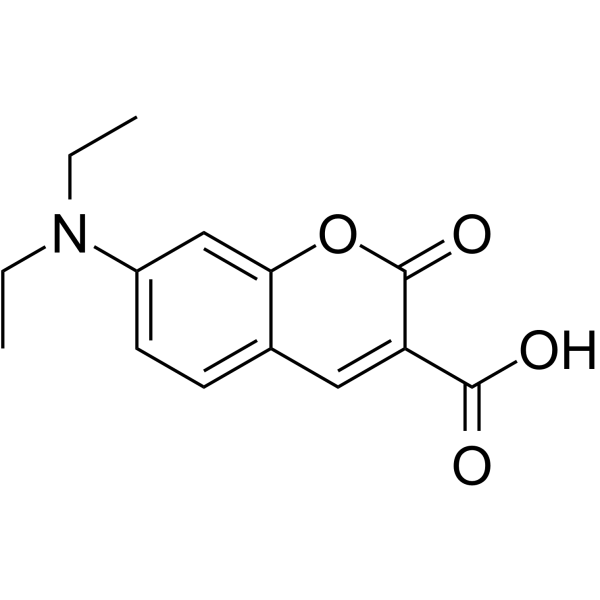 0 ImagesSynonyms: DEAC; Coumarin D 1421; D 14217ACC1 (DEAC; Coumarin D 1421; D 1421) is a monocarboxylate transporter 1 (MCT-1)/MCT-4 specifc blocker. 7ACC1 attenuates renal cancer cell proliferation, migration, invasion and down-regulates the levels of MCT1/MCT4 expression and extracellular lactate. 7ACC1 is promising for research of cancers.
-
BAY-8002
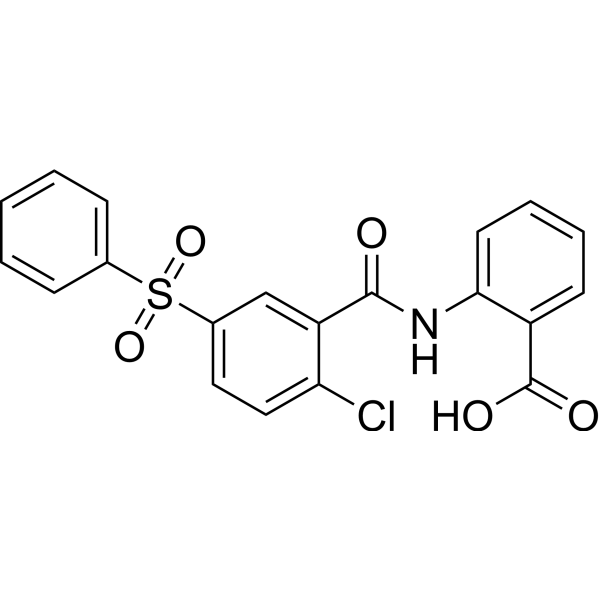 0 ImagesBAY-8002 is a potent, selective, orally active inhibitor of monocarboxylate transporter 1 (MCT1), with an IC50 of 85 nM in the MCT1-expressing DLD-1 cells, displays excellent selectivity against MCT4. Anti-tumor activity.
-
2-Hydroxy-4-methoxybenzoic acid
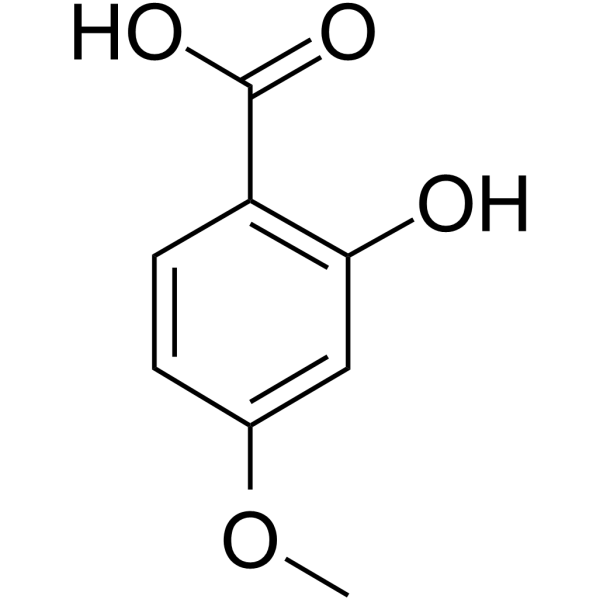 0 Images2-Hydroxy-4-methoxybenzoic acid is an orally active inhibitor of MCT-1 and MCT-4, as well as a plant biomarker. 2-Hydroxy-4-methoxybenzoic acid can be isolated from roots. 2-Hydroxy-4-methoxybenzoic acid induces Apoptosis and loss of mitochondrial membrane potential. 2-Hydroxy-4-methoxybenzoic acid exhibits anticancer activity against breast cancer. 2-Hydroxy-4-methoxybenzoic acid normalizes lactic acid levels. 2-Hydroxy-4-methoxybenzoic acid neutralizes viper venom and attenuates its lethal, hemorrhagic, coagulant and anticoagulant activities in male albino mice. 2-Hydroxy-4-methoxybenzoic acid possesses antihyperlipidemic, antidiabetic and hepatoprotective activities.
-
PEG9MA10-PAB10-GalMA10
 0 ImagesCat. No.: HY-184926PEG9MA10-PAB10-GalMA10 is a CD147 LYTAC degrader. PEG9MA10-PAB10-GalMA10 binds to the asialoglycoprotein receptor (ASGPR) via its galactose methacrylate domain, mediating its uptake by hepatoma cells. PEG9MA10-PAB10-GalMA10 induces lysosome-dependent degradation of CD147, resulting in concurrent loss of associated MCT1 and MCT4. PEG9MA10-PAB10-GalMA10 reduces extracellular lactate levels, increases intracellular lactate accumulation, inhibits glycolytic activity, and enhances mitochondrial respiratory capacity. PEG9MA10-PAB10-GalMA10 decreases the secretion of MMP-2 and MMP-9, and upregulates the expression of E-cadherin. PEG9MA10-PAB10-GalMA10 exhibits anti-tumor efficacy in hepatoma models. PEG9MA10-PAB10-GalMA10 can be used for research on liver cancer (hepatocellular carcinoma).

-
MCT1-IN-2
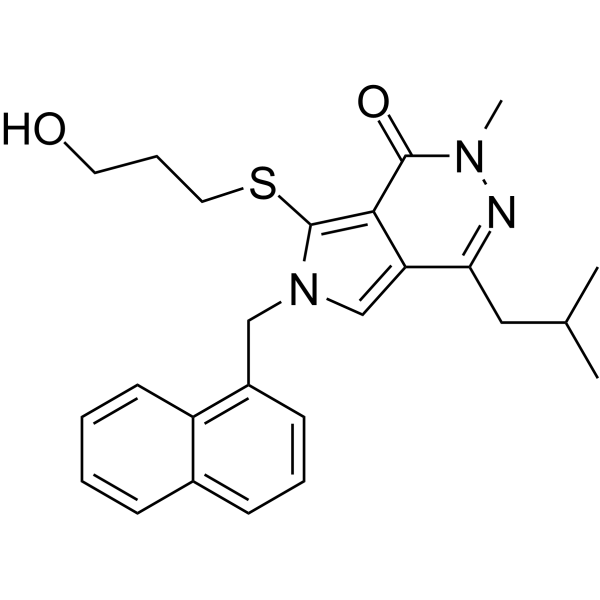 0 ImagesMCT1-IN-2 is a potent monocarboxylate transporter 1 (MCT1) inhibitor. MCT1-IN-2 has anti-cancer activity.



